Introduction
You spent 20 minutes crafting the perfect follow-up email. Clear value proposition, specific next step, no fluff. Then silence. The prospect never opened it.
Most sales reps assume the problem is timing, or the email body, or the prospect's schedule. The real culprit is usually the first six words they saw — and immediately dismissed.
According to Campaign Monitor, 47% of email recipients decide whether to open based solely on the subject line, and 69% use it to flag spam. The average employee receives 117 emails daily — before counting Teams or Slack — which means your follow-up subject line has roughly two seconds to earn a click.
That's exactly what this guide addresses. You'll find scenario-specific subject lines, plug-and-play formulas, and concrete rules for what earns opens — and what quietly kills your pipeline.
Key Takeaways
- Keep subject lines under 50 characters — they outperform longer ones, especially on mobile
- A name, company reference, or callback to your last conversation boosts open rates
- Scenario-specific lines beat generic "following up" openers every time
- "Just checking in," "touching base," and similar phrases signal low value and kill open rates
- Test one variable at a time to build a subject line playbook that actually scales
Why Your Follow-Up Subject Line Is Make or Break
Your prospect's inbox is a hostile environment for sales emails. On desktop, most email clients display around 60 characters of a subject line. On mobile — where roughly 41.6% of email opens happen — that drops to just 25–30 characters. Depending on the device, that's four to six words before the cutoff.
That constraint has real consequences. A subject line that reads well on a laptop can turn into "Re: following up on our con..." on an iPhone — which tells the prospect nothing and gives them no reason to tap.
Front-load the deal context. The first three to five words should carry the weight — the prospect's company name, the specific topic, or the decision you're waiting on. Three practical ways to do this:
- Open with the prospect's company name or a deal reference (e.g., "Acme proposal — next step")
- Name the specific decision or action (e.g., "Contract feedback needed by Friday")
- Reference what's already been discussed, not what you're hoping to discuss
What's Actually at Stake
For sales reps managing active pipelines, the subject line isn't a copywriting exercise — it's a revenue variable. A prospect who doesn't open your post-proposal follow-up can't move forward. A lead who ignores your re-engagement attempt simply drops off the forecast.
The subject line is the only lever you control before the open happens. Your value proposition, your timing, your case studies — none of it exists for the prospect until they click. The subject line is the door.
What Makes a Great Sales Follow-Up Subject Line
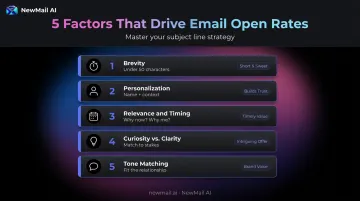
Five factors consistently separate subject lines that get opened from ones that don't.
Brevity
Keep it under 50 characters. Salesloft recommends 1–4 words for sales emails; Yesware's data shows "Next steps" — two words — can reach a 70% open rate with 20% higher reply rates than average. Shorter isn't just easier to read — it signals that you know exactly what you're asking for. Length implies justification; brevity implies confidence.
Personalization
Generic subject lines feel automated because they are. Referencing the prospect's company name, a detail from your last call, or a recent trigger event makes the email feel directed rather than blasted. Campaign Monitor reports personalized subject lines are 26% more likely to be opened — and that's general email data, not sales-specific, so treat it as a useful benchmark rather than a precise forecast.
Relevance and Timing
The best subject lines answer two unspoken questions: Why now? and Why me? A deadline reference, a company milestone, or a detail from a prior conversation does this instantly. Subject lines that could apply to any prospect at any time answer neither question.
Curiosity vs. Clarity
Open-loop subject lines ("Had one thought about your Q3 plan") can drive opens — but only if the email body delivers. Misleading or vague subject lines that inflate open rates without generating replies damage the trust you need for future messages. Use curiosity when you have something genuinely interesting to say; use clarity when the decision or action is time-sensitive.
Tone Matching
A subject line for a prospect you've never spoken with should be direct and professional. One for a prospect you've had three calls with can be warmer, even conversational. Tone mismatch — formal language with a long-term contact, breezy language with someone you just met — signals a disconnect that works against you before the email is even opened.
30+ Sales Follow-Up Email Subject Lines by Scenario
Scenario-based subject lines outperform generic openers because they're contextually relevant. The prospect recognizes the email as a continuation of something real, not another mass outreach attempt. The five scenarios below cover the full arc of a sales conversation — from first follow-up to final close.
Scenario 1: After an Initial Meeting or Call
The goal here is recency and specificity — reference what just happened before it fades.
- "Great talking today, [First Name]" — Simple, warm, accurate. Recency signals it's timely.
- "Next steps for [topic we discussed]" — Action-oriented. Research consistently backs "Next steps" as one of the highest-performing phrases in sales follow-up email.
- "One thing I forgot to mention" — Creates a low-stakes open loop. Useful when you have a genuine follow-on point.
- "Recap from our call + one question" — Sets expectations clearly. Prospects know what they're clicking into.
- "[First Name], your call notes" — Personal, practical, and different from the usual follow-up framing.
- "Following up on [specific topic]" — More specific than "Following up" alone. Data shows "Follow-up" (as one word) tends to earn notably more opens and replies than the two-word variant — worth the small tweak.
Scenario 2: After Sending a Proposal or Quote
These subject lines should feel helpful, not pressuring. The prospect has the information — your job is to invite a reaction.
- "Any questions on the proposal?" — Direct and low-pressure. Signals you're available, not chasing.
- "Recap: what's included for [Company Name]" — Useful for complex proposals where a summary might help.
- "[First Name], the proposal — did it land okay?" — Conversational and genuinely curious in tone.
- "One thing I want to clarify in the quote" — Works when there's a legitimate point to address; don't use this as a hook for nothing new.
- "Decision deadline for [offer/solution]" — Use when there's a real timeline.
- "What would make this a yes?" — Bold, but effective with warm prospects who are clearly evaluating.
Scenario 3: After a Demo
Reference what the prospect engaged with. Generic post-demo follow-ups get treated like mass emails.
- "Here's more on [feature you asked about]" — Specific to the conversation. Shows you were listening.
- "Your thoughts on the demo, [First Name]?" — Invites a response without pressure.
- "A few things to share after [Company Name]'s demo" — Signals there's substance, not just a check-in.
- "One thing worth seeing again" — Works when there's a specific feature or use case worth highlighting.
- "[First Name] — next step after the demo" — Action-oriented, keeps momentum.
Scenario 4: After No Response (Re-engagement)
Silence calls for a different approach. Pattern-interrupt subject lines acknowledge the situation rather than pretending it didn't happen.
- "Did I lose you?" — Refreshingly direct. Often prompts a response from prospects who got busy and forgot.
- "Still thinking about [pain point]?" — Ties the re-engagement back to the original problem, not your product.
- "Can I be honest, [First Name]?" — Creates curiosity without being misleading, as long as the email body is equally direct.
- "Your competitors are doing this" — Competitive urgency. Use only when it's accurate and relevant.
- "Is [original goal] still a priority?" — Reframes the conversation around their objective, not your follow-up.
- "What changed?" — Short, direct, and treats the prospect as a peer rather than a lead to chase.
Scenario 5: Final Attempt (Break-Up Email)
Break-up emails work because they remove pressure entirely. Prospects who've been avoiding a decision often respond when they realize the option is closing.
- "Should I close your file?" — Permission-based urgency. One of the most-cited effective break-up subject lines.
- "Permission to move on?" — Polite, respectful, and honest about where things stand.
- "Last note from me, [First Name]" — Clear and low-pressure. Doesn't demand a response, which often prompts one.
- "Closing the loop on [Company Name]" — Professional framing that signals finality without drama.
- "One last question before I go" — Gives them an easy reason to respond. Minimal ask, maximum clarity.
Subject Line Formulas You Can Customize
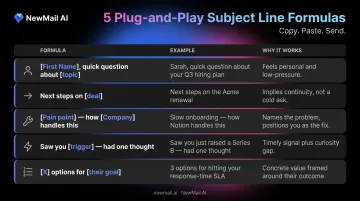
Formulas work best when you understand the logic behind them — not just fill in the blanks.
| Formula | Example | Why It Works |
|---|---|---|
[First Name], quick question about [specific topic] |
"Sarah, quick question about Q3 onboarding" | Name + specificity signals a direct message, not a blast |
Next steps on [initiative or deal] |
"Next steps on the Acme proposal" | Action-oriented; Yesware data supports "Next steps" as high-performing |
[Pain point] — how [Company] handles this |
"Manual reporting — how Acme handles this" | Ties the email directly to a problem they care about |
Saw you [trigger action] — had one thought |
"Saw you expanded to EMEA — had one thought" | Trigger events make follow-ups feel timely and researched |
[X] options for [their goal] |
"3 options for reducing onboarding time" | Specificity + utility; tells them exactly what's inside |
The three-word test: Before sending, try summarizing the email's value in three words. If you can't — "check in email" doesn't count — the subject line is probably too vague. "Proposal deadline Tuesday" passes. "Following up again" doesn't.
Using AI to Scale Without Losing Your Voice
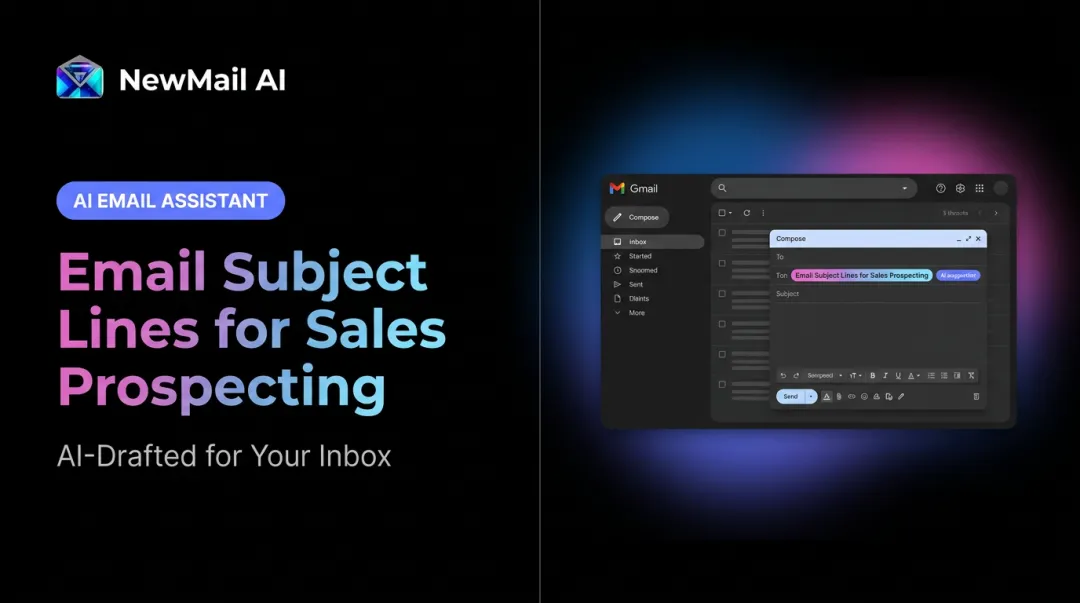
Sales teams managing high email volumes can use AI writing tools to generate and personalize subject line variations at scale. NewMail AI's Nova assistant, for example, drafts follow-up emails in your voice directly inside Gmail, Outlook, and Apple Mail — learning your tone, style, and priorities in about 60 seconds during setup.
The approval-first workflow means every draft goes through you before sending — scaling output without sacrificing authenticity or control. For reps handling 50+ active threads, that balance of speed and oversight is where the time savings actually show up.
A/B Testing Your Subject Lines
Test one variable at a time — anything else makes it impossible to know what moved the needle:
- Vary length, personalization tokens, question vs. statement format, or deal-specific phrasing — one change per test
- Track both open rate (visibility) and reply rate (intent) — reply rate is the truer measure of sales performance
- Build a short playbook of 3–5 patterns that consistently land for your industry and deal stage, then iterate from there
Most email platforms support variant testing at the cadence level. Even a simple spreadsheet tracked over 30–60 days will surface patterns specific to your deals and buyers — far more useful than any one-size-fits-all formula.
Common Subject Line Mistakes That Kill Your Open Rate
Vague and Clichéd Openers
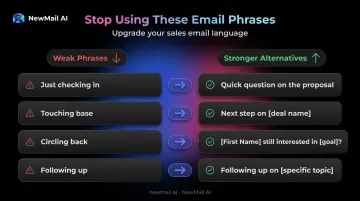
"Just checking in," "Touching base," and "Circling back" all share the same problem: they signal nothing new is coming, so there's no reason to open. Yesware reports "Touching base" fails more than 50% of the time, and "Can you chat" generated just a 1.9% reply rate across 54,000 uses.
Better replacements:
| Weak phrase | Stronger alternative |
|---|---|
| "Just checking in" | "Quick question on the proposal" |
| "Touching base" | "Next step on [deal name]" |
| "Circling back" | "[First Name], still interested in [goal]?" |
| "Following up" | "Following up on [specific topic]" |
Spam Trigger Words
Mailchimp's spam guidance flags patterns like excessive punctuation, all caps, and phrases such as "FREE OFFER!!!" or "ACT NOW!!!" Even one flagged word can redirect a carefully crafted follow-up to the spam folder — undermining the whole sequence.
Common triggers to avoid:
- FREE, Guaranteed, Winner
- Act now, Limited time offer
- No obligation, Risk-free
- Earn money, Click here
Any subject line that reads like a promotion — not a direct message — creates deliverability risk. That same promotional framing is also what drives the next mistake: subject lines that misrepresent what's actually inside.
Subject Lines That Don't Match the Email Body
Curiosity-driven openers that mislead — "Thought you'd want to see this" before a generic product pitch — might lift open rates briefly. They reliably damage reply rates on every subsequent email. Prospects who feel tricked don't give second chances.
Frequently Asked Questions
What's a good subject line for a sales follow-up email?
A strong follow-up subject line is short (under 50 characters), specific to the prior conversation or prospect situation, and written in a natural tone rather than sales language. "Next steps on the Acme proposal" beats "Following up on our recent conversation" on all three counts.
How long should a sales follow-up email subject line be?
Aim for under 50 characters — roughly 6–8 words. Mobile devices display only 25–30 characters before truncating, so front-load the key deal context in the first few words. Brevity paired with relevance consistently outperforms longer subject lines.
Should you use the prospect's name in a follow-up email subject line?
Yes, but pair it with something specific. "Sarah" alone adds little; "Sarah, question about the Q3 rollout" does. Avoid using a name in every follow-up in a sequence — it loses its personal feel quickly and can start to read as formulaic.
What words should you avoid in a sales follow-up email subject line?
Avoid spam triggers (Free, Guaranteed, Act Now), generic phrases (Just checking in, Touching base, Circling back), and anything that reads like a broadcast rather than a direct message. If the subject line could apply to 500 different prospects, it's too generic.
How do you write a subject line for a follow-up email after no response?
Use curiosity-driven or pattern-interrupt openers: "Did I lose you?" or "Can I be honest?" acknowledge the silence directly, which often gets better results than pretending it didn't happen. Keep the email body equally direct — don't use a bold subject line to deliver a weak message.
Should follow-up emails use "Re:" in the subject line?
Only when it's genuine. The FTC's CAN-SPAM guidance prohibits deceptive subject lines and false header information. Using "Re:" to fake a prior thread is both a compliance risk and a fast way to lose credibility with a prospect. If you're genuinely replying to an existing thread, "Re:" is fine — otherwise, skip it.